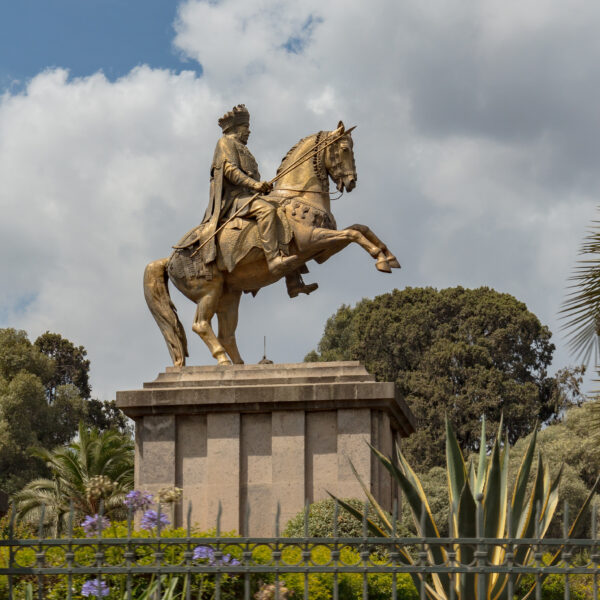
Public argument in Ethiopia has a habit of reducing history to moral theatre. Individuals are cast as either saviours or destroyers; whole eras are remembered as either glory or ruin. The dispute over Menelik II is the clearest example. For some, he stands as the architect of a modern state; for others, as the author of conquest and dispossession. Neither verdict, on its own, is adequate to the historical record, and neither is sufficient to the political work that confronts the country now.
Menelik was a ruler of the late nineteenth century, formed by a political world in which empire, military expansion, and coercive state-building were neither exceptional nor hidden. He was a figure inside history. To say this is not to excuse the violence associated with his rule. It is simply to insist that explanation is not the same thing as absolution, and that moral seriousness requires more than retrospective denunciation or retrospective veneration.
The larger question is less about Menelik himself than about what sort of country Ethiopia imagines itself to have been.
Ethiopia’s past includes notable political achievement, diplomatic endurance, and projects of consolidation that many continue, understandably, to value. But these did not amount to an equal inheritance for all who lived within the state’s reach. They coexisted with conquest, hierarchy, slavery, exclusion, and uneven incorporation. To acknowledge this is to reject the comforting fiction that the same history was lived in the same way by all.
An unequal inheritance
That fiction has done lasting damage. It has encouraged Ethiopians to speak of “the national past” as though it were a singular experience, differently interpreted perhaps, but ultimately shared on common terms. It was not. Some communities encountered the state as a source of prestige, protection, and centrality. Others encountered it as military expansion, political subordination, and cultural marginalisation. These are not merely competing readings of one common experience. They are, often enough, different experiences altogether, produced within the same political order but distributed unequally across it.
This is why appeals to a lost unity so often ring hollow. They ask too much of memory and too little of history. There is no version of Ethiopia’s past to which all its peoples can return with comparable sentiment. Nostalgia, in such a setting, is seldom innocent. More often it is selective memory raised to the level of political principle.
Nor did later regimes resolve these difficulties. The revolutionary violence of the Derg (the military junta that ruled Ethiopia from 1974 to 1991), the centralising authoritarian habits of the Ethiopian People’s Revolutionary Democratic Front (EPRDF), and the unresolved tensions of the present have all borne, in different forms, the marks of a deeper problem: the absence of an agreed and credible basis upon which power, belonging, and recognition might be negotiated in common. These periods were not identical, and it would be careless to treat them as such. But it would be equally careless to miss the continuity. Each, in its own way, inherited a political field in which the terms of inclusion had never been settled, and in which memory itself had become a site of struggle.
It is often said that dwelling on historical injury imperils national cohesion. In truth, the greater danger lies in refusal. A polity held together by denial is not stable; it is merely brittle. Where memories of loss, humiliation, or forced incorporation are dismissed as partisan invention, they do not disappear. They return in harder form, as grievance without channel, as suspicion without remedy, as politics conducted through mutual negation. Selective remembrance may produce temporary rhetorical unity, but it cannot sustain trust.
If peace is to mean anything more than the suspension of open conflict, it must begin from a more exacting premise: that Ethiopia’s peoples are bound to one another in a shared, though deeply unequal, historical relationship. They have not inhabited separate worlds. They have shaped one another’s conditions of life, often violently, sometimes productively, always consequentially. No group stands wholly outside the story of the others. No future worthy of the name can be constructed on the pretence that one community’s security can be secured in abstraction from the fears, memories, and claims of the rest.
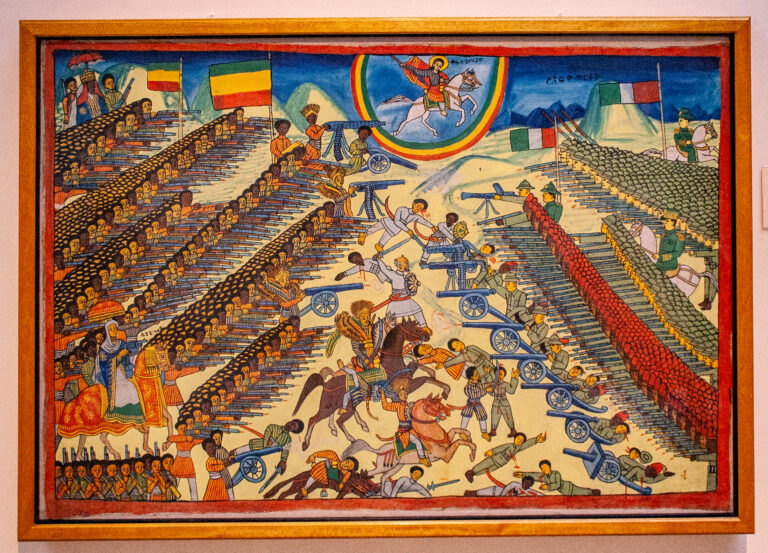
To accept this is also to accept that the past will not yield a single, settled interpretation. There will be no final account capable of dissolving contradiction. Ethiopia’s history contains state-building and subjugation, achievement and injury, loyalty and coercion. One does not honour this complexity by reducing it to symmetry, as though all claims were equal in weight or all experiences equal in consequence. Nor does one honour it by establishing a new orthodoxy and calling it truth. The point is to develop the political discipline to live with a past that remains morally and historically unsettled, without turning that unsettledness into a warrant for permanent enmity.
The work of invention
But recognition and historical seriousness, indispensable though they are, cannot suffice on their own. A country cannot live by critique alone. It must also find the imaginative and institutional resources to shape forms of common life not wholly dictated by inherited antagonism. This requires more than eloquent appeals to reconciliation. It requires asking, in practical terms, what arrangements might permit people formed by unequal histories to inhabit the same state without requiring that one must dominate in order to feel secure.
That task calls for invention in the strict political sense. It means designing institutions in which rights are not rhetorical, where legal protection does not depend upon proximity to power, where differences of language, memory, and regional attachment are not treated as threats to the polity, and where disagreement can be conducted without fear that it will culminate in coercion. It means building a constitutional order in which limits are credible, adjudication is trusted, public authority is shared rather than hoarded, and the work of education does not consist in the manufacture of patriotic amnesia. Without such forms, even the language of truth may become one more instrument of exclusion, each faction claiming exclusive custody of justice whilst denying legitimacy to all others.
Nor can this be achieved without risk. Entrenched conflicts generate habits of caution that are easily mistaken for prudence. Yet there are moments when caution merely preserves the architecture of mistrust. A more habitable future will require political actors willing to revise cherished myths, to listen where they would prefer to dismiss, to enter relationships not guaranteed in advance, and to support reforms whose full effects cannot be known beforehand. There is no serious transition that does not involve uncertainty.
Ethiopia does not need a new national myth, whether imperial in tone or democratic in vocabulary. It does not need a purified memory. It needs a more adult politics: one capable of facing the past without either worship or denial, one willing to recognise that historical experience has been shared unequally, and one prepared to construct institutions sturdy enough to bear disagreement without collapsing into domination.
That is a more difficult undertaking than choosing between pride and condemnation. It offers less emotional comfort and fewer rhetorical rewards. But it is the only basis upon which a genuinely shared future might be built.