Source: The National
Egypt has agreed to develop seaports in the Horn of Africa nations of Eritrea and Djibouti, part of its campaign to increase pressure on landlocked Ethiopia over its long-running Nile water dispute, sources in Cairo told The National.
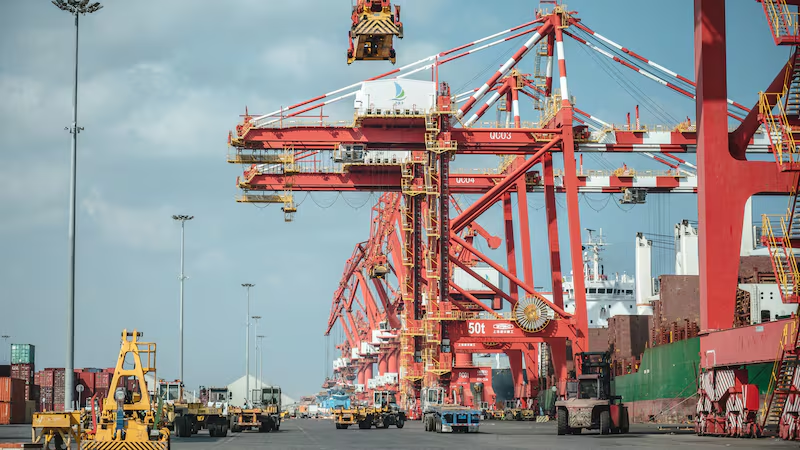
Under the agreements signed without fanfare, Egypt will upgrade the strategic Red Sea port of Asab in Eritrea and Doraleh in Djibouti, on the Gulf of Aden, to increase their capacity, and create berths for warships and the scope to post small but elite military contingents.
Both ports lie nearthe Bab Al Mandeb strait, the southern gate of the Red Sea. Ethiopia, which borders Eritrea and Djibouti, is known to be heavily reliant on Doraleh for the transfer of goods.
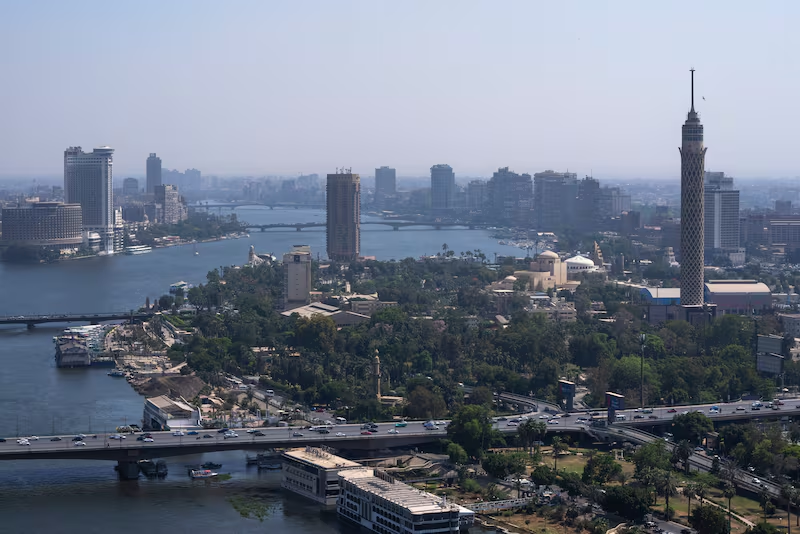
Egypt has more than 2,000km of Red Sea coastline on its mainland and the Sinai Peninsula. It controls the Suez Canal that links the Red Sea to the Mediterranean.
It has repeatedly maintained its strong opposition to landlocked nations such as Ethiopia gaining a territorial foothold on the Red Sea, the main maritime link between Europe, the Middle East, Asia and East Africa.
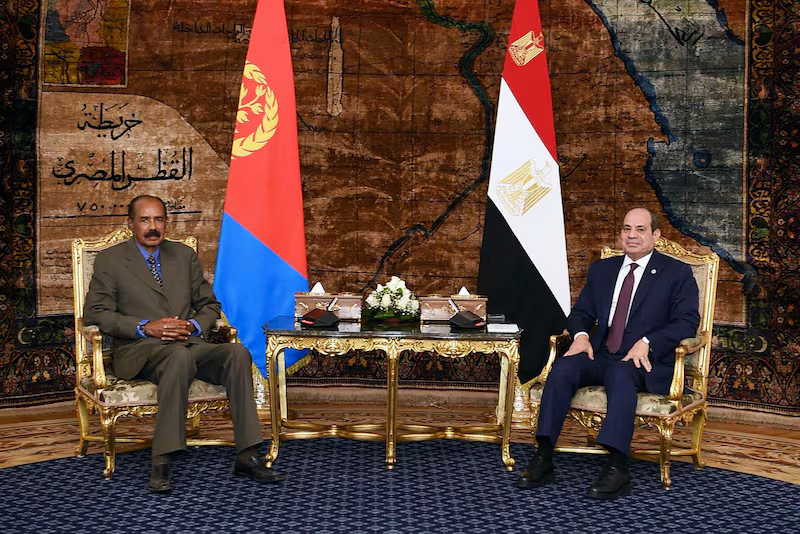
The discreet signing of Egypt’s agreements with Eritrea took place during a late October visit to Cairo by President Isaias Afwerki, according to the sources who have first-hand knowledge of the deals. The other deal was negotiated and finalised by senior Egyptian and Djibouti officials, they added.
Egypt, already bound to Eritrea and Djibouti by strong political and military ties, will build infrastructure at the two ports to refuel and resupply warships from its southern fleet, including destroyers, submarines, and troop and helicopter carriers, said the sources.
The agreement with Djibouti, they said, also provided for upgrading a road network leading to Doraleh. Neighbouring Ethiopia, landlocked since Eritrea seceded in 1993 after a long civil war, relies heavily on Doraleh for sea access.
“The agreements legitimise our military presence in the two countries,” said one of the sources. “Already Egyptian warships are frequent visitors to the two ports.”
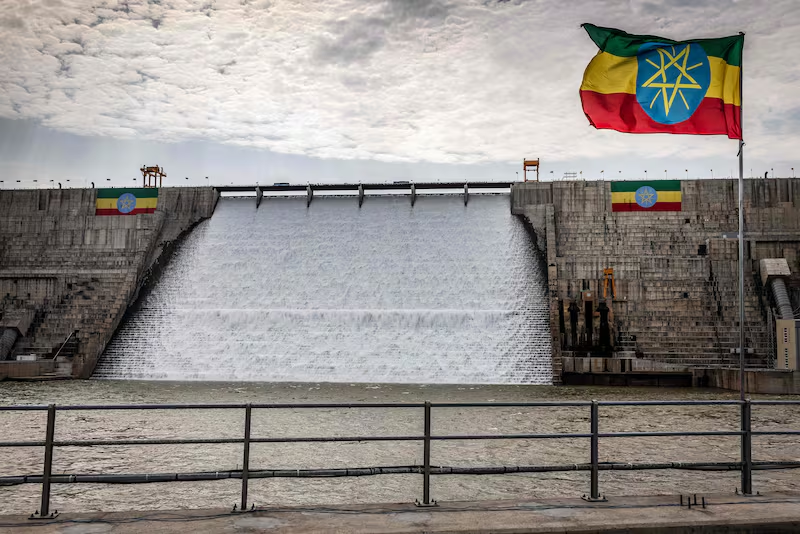
Egypt and Ethiopia have been locked in a bitter dispute for more than a decade over the anticipated effects of a vast hydroelectric dam that Addis Ababa completed this year.
Egypt, which relies on the Nile for nearly all its freshwater needs, views the Grand Ethiopian Renaissance Dam as an existential threat, contending it will reduce its vital share of the river’s water and give Ethiopia unacceptable control over its downstream flow at times of drought.
Egypt and Sudan had been in negotiations with Ethiopia for more than a decade, demanding Addis Ababa enters into a legally binding agreement on the operation and management of the dam.
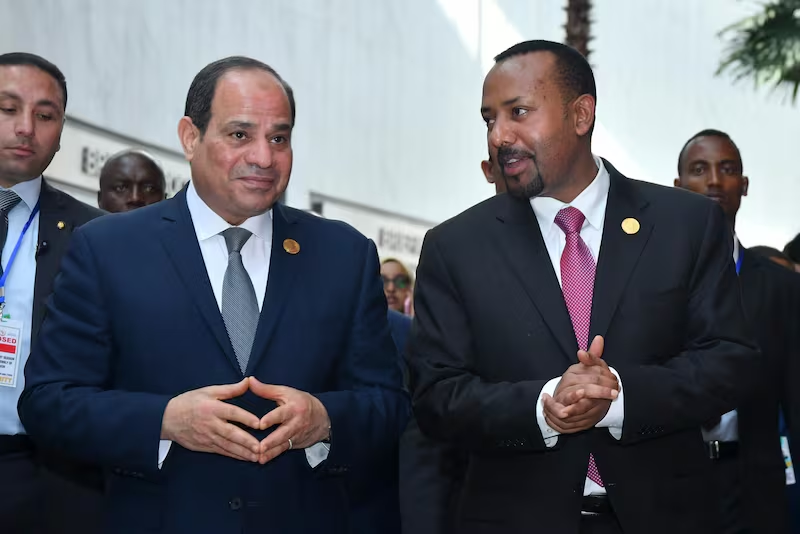
In response, Ethiopia has repeatedly sought to reassure Cairo and Khartoum that the dam will not harm their interests, while emphasising the project’s benefits for economic development and its sovereign right to operate it as it sees fit.
The gradual filling of the vast reservoir behind the dam, which took place from 2020 to last year, had little effect on Egypt’s share of Nile water, thanks to abundant rain on the Ethiopian highlands.
However, war-torn and downstream Sudan has complained that Ethiopia’s failure to share real-time data on the dam’s operation has caused deadly and destructive flooding in some of its regions.
With the last round of failed negotiations held two years ago, Egypt has been building up alliances and trust with Ethiopia’s neighbours such as Somalia, Djibouti – both members of the Arab League – Eritrea and Kenya, while offering technical expertise in a wide range of fields to many of the 11 Nile Basin nations.
Last year, Egypt began stationing troops and military advisers in Somalia after the two nations signed a defence agreement. Egypt also provided Somalia with weapons and counter-terrorism advisers to aid its fight against Al Shabab, the terrorist group. It also intends to participate in a new African Union peacekeeping mission in the country.
“The lack of serious bilateral or trilateral negotiations on the dam has meant the focus is now more on regional issues that are definitely causing tension between Cairo and Addis Ababa,” said British-based William Davison, managing editor of Ethiopia Insight.
“The tension is focused on Egypt’s participation in the Somalia mission and Ethiopia’s regional maritime ambitions. Clearly, Ethiopia does not want to see Egyptian troops in Somalia, but if that came to pass, it would not necessarily be a game-changer and lead to war between the two nations.
“The overall picture is that the dam is a reality and will continue to be a source of tension. I cannot see the two countries fostering trust and co-operation, but I don’t see them going into armed conflict either.”