Source: The Telegraph
With thousands marching in the streets and enemies closing in, Iran’s theocracy is now an empty shell
Somewhere deep in a bunker, or wherever he may be hiding, Ayatollah Ali Khamenei will probably not reflect on one bitter reality. Regardless of what happens next, and whether Donald Trump orders American stealth bombers into action or breaks his promise to intervene, the life’s work of Iran’s Supreme Leader already lies in ruins.
During Khamenei’s 37-year rule, the Islamic Republic has gone from being a revolutionary state and bastion of resistance against what his most ardent followers call the “global arrogance” – America, Israel and the West – to an empty vessel, defanged of power and ambition. Under him, the dream of Iran as regional superpower and shining example of Islamic rule has died.
Khamenei’s great project was to forge an “axis of resistance” capable of inflicting such harm on Israel and America that neither would dare attack Iran.
To achieve this power of deterrence, he dispatched the Islamic Revolutionary Guard Corps (IRGC) – and particularly its expeditionary wing, the Quds Force under the late General Qasem Soleimani – to sharpen the claws of Iran’s ideological and religious allies across the Middle East.
The IRGC supplied tens of thousands of missiles to Hezbollah, the radical Shia movement in Lebanon. Soleimani’s men did the same for Hamas and Palestinian Islamic Jihad in Gaza. From 2012 onwards, they intervened with full force in Syria’s civil war, preserving Bashar al-Assad’s bloodsoaked dictatorship as an ally and vital supply route for the “axis of resistance”.
In Iraq, the IRGC built up a constellation of Shia militias; in Yemen, they backed the Houthi rebels who seized the country’s capital, Sana’a, in 2014. Even in Saudi Arabia and Bahrain, Iranian agents tried to subvert the ruling monarchies by stirring up rebellion among Shia subjects.
Meanwhile, at home, Khamenei exposed Iran to a crushing burden of economic sanctions as the price of driving forward the country’s nuclear programme and giving himself the ability to build the ultimate weapon.
By turning Iran into a nuclear threshold state – and the paymaster and arms dealer of a chain of formidable terrorist movements, capable of raining down destruction on the nation’s foes – Khamenei sought to protect the Islamic Republic from attack and guarantee the survival of his regime.
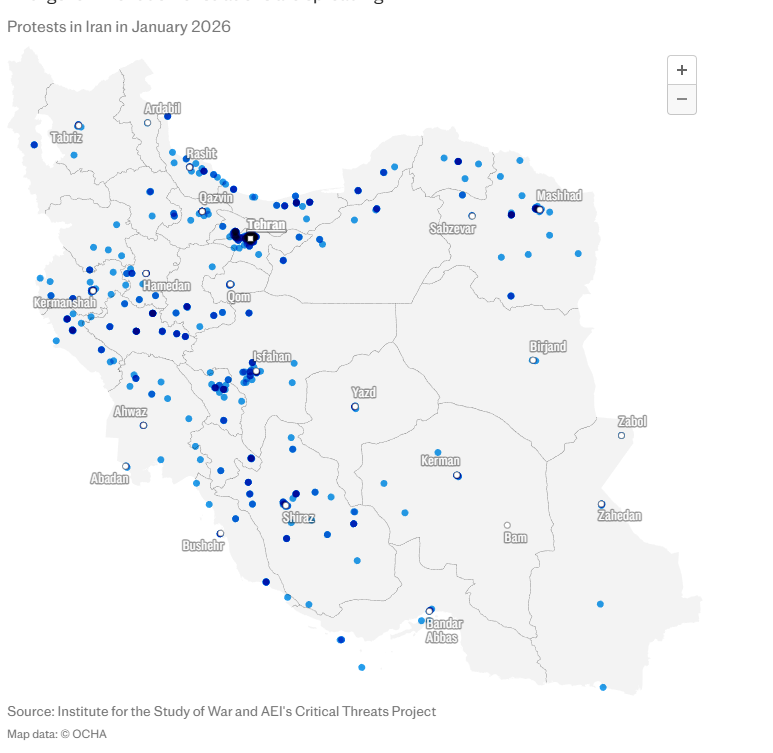
Anti-government demonstrations are spreading
With Iran secure and powerful abroad, its clerical rulers would be free to order and regiment their own society according to Islamic principles, creating an example of stability and success that the rest of the Muslim world would wish to follow.
Such were Khamenei’s vaulting ambitions, pursued with dogged tenacity from the moment that he succeeded his old mentor, Ayatollah Ruhollah Khomeini, as supreme leader in 1989. And what has become of the grand plans?
Khamenei came to discover that arming terrorists is far easier than coping with the consequences of their actions. The Hamas atrocity of Oct 7 2023 provoked Israel into launching a meticulously planned and devastatingly effective campaign to destroy the “axis of resistance” once and for all.
First Hamas was pulverised in its Gaza stronghold. Then, in 2024, Israel eliminated virtually the entire leadership of Hezbollah and thousands of rank-and-file operatives, including by the extraordinary method of turning the terrorist group’s pagers and walkie-talkies into lethal booby-trapped devices.
The evisceration of Hezbollah robbed Assad of his most useful ally, triggering the downfall of Syria’s dictatorship in December 2024. Six months later, Israel and America launched what became a joint strike against Iran’s nuclear programme, wrecking Khamenei’s path towards the ultimate weapon by reducing his vital plants and installations to smoking ruins.
Elsewhere, Israel and America bombed the Houthis in Yemen – who were, in any case, Iran’s least reliable allies – while Iraq’s Shia militias were cowed into lying low and staying out of the struggle.
One by one, every link in the chain of Iran’s “axis of resistance” was ruthlessly broken.
And what of Khamenei’s plan to build a perfect Islamic society at home? It turned out that Iran’s ambitious youth were not prepared to take instructions on how to live their lives from ageing Ayatollahs.
When a young woman, Mahsa Amini, was murdered in state custody in 2022 after being arrested for supposedly wearing her hijab improperly, many thousands took to the streets in protest. The regime restored control with its customary brutality yet it quietly stopped enforcing the law that compels women to cover their hair in public.
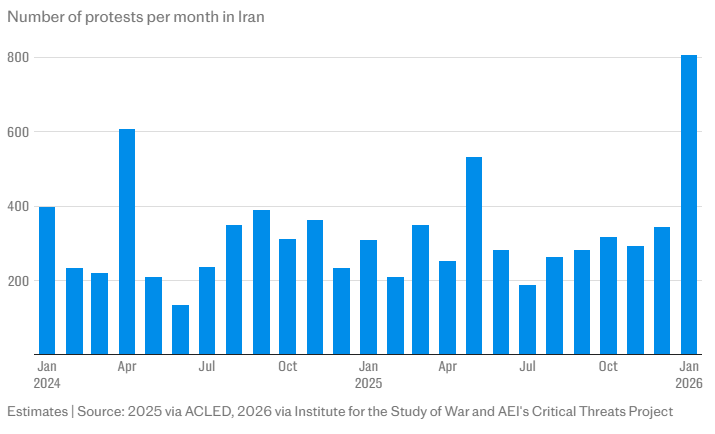
Iran protests are increasing
The thuggish “morality police”, previously given free rein to harass women in the streets, disappeared from the cities. The Islamic Republic implicitly admitted that it could no longer enforce its strictures on young Iranians.
Today, if he has any self-knowledge at the age of 86, Khamenei must contemplate the collapse of all his schemes. Iran was supposed to be strong enough to deter an American attack. Now Trump is free to decide whether or not to intervene in the Islamic Republic’s latest internal crisis.
The “axis of resistance” was intended as a mighty force against Iran’s enemies. Now even Lebanon’s traditionally feeble government is committed to disarming Hezbollah and sending its army to control the terrorist group’s old strongholds in the south of the country.
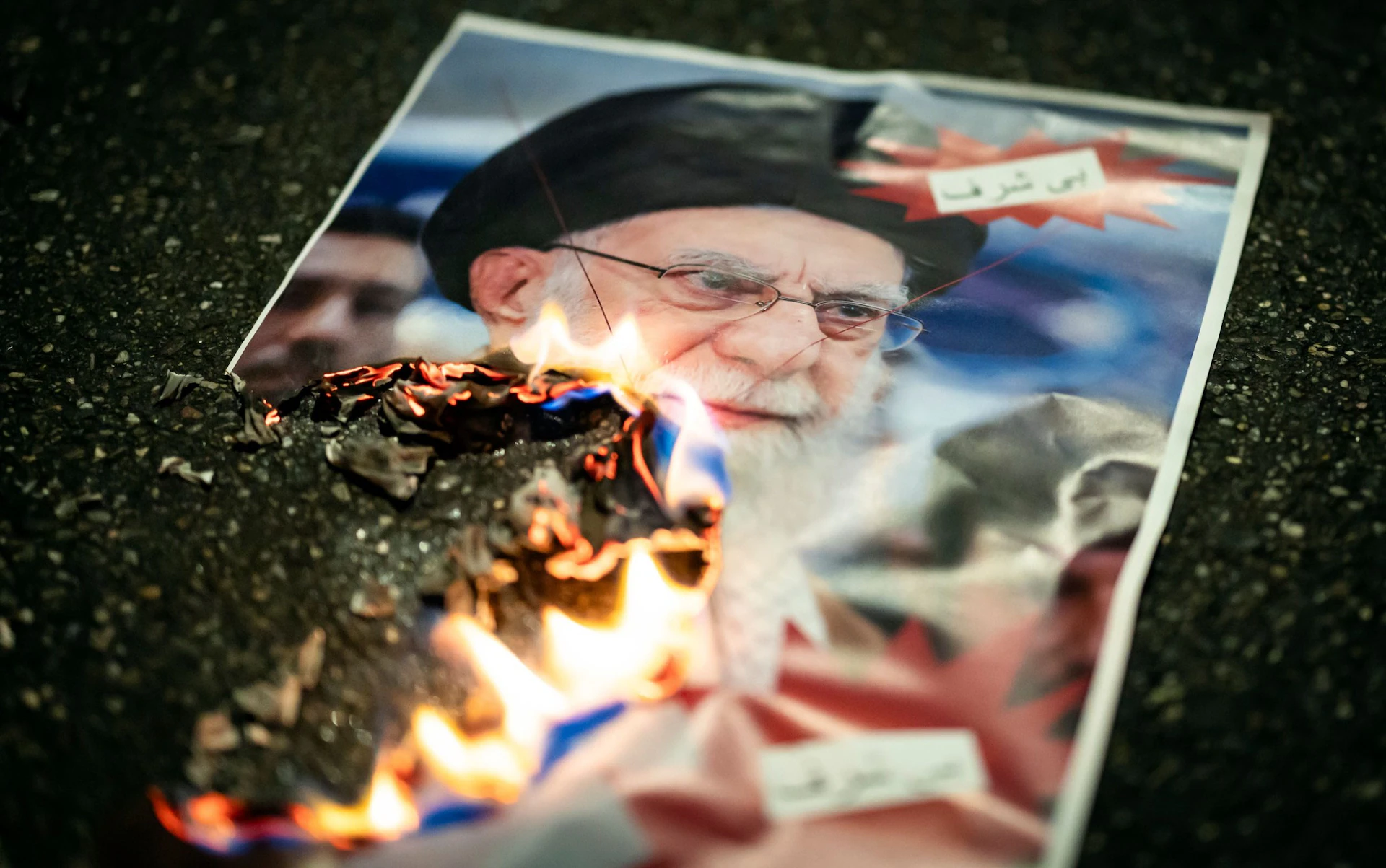
Iran’s society was supposed to present a shining example of Islamic piety. Now its people are marching against their clerical rulers once again and not even the most obdurate Ayatollah dares enforce the rules on what women should wear on their heads.
Khamenei’s regime may or may not survive the days and weeks ahead. But whatever happens, the Islamic Republic under his calamitous rule has become a hollow shell.