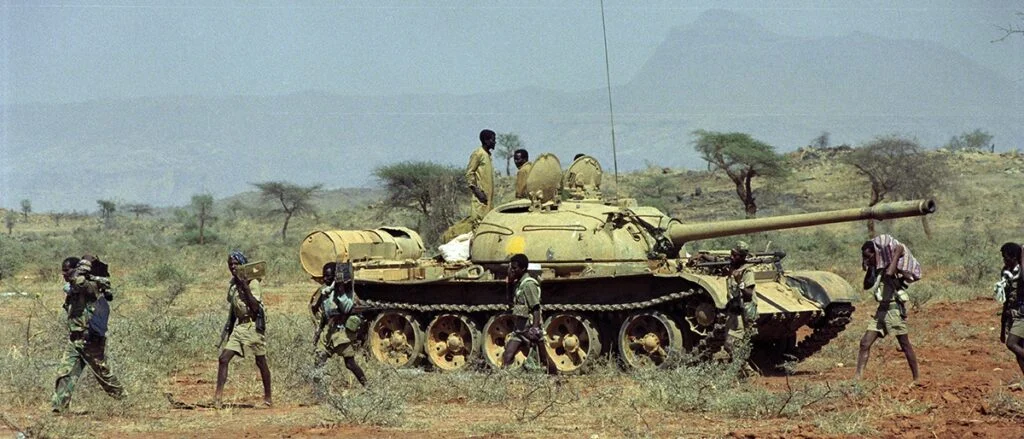
Source: Addis Standard
Could trigger “Africa’s Second World War”
Addis Abeba – A renewed war between Ethiopia and Eritrea could ignite a broader conflict involving 10–15 countries across three continents and risk becoming “Africa’s Second World War,” a conflict expert has warned, according to a report by Anadolu Agency.
Speaking to Anadolu Agency, Kjetil Tronvoll, professor of peace and conflict studies at Oslo New University College, said tensions between the two neighboring countries have sharply escalated and could draw in regional and international actors if fighting erupts.
According to Tronvoll, relations between Addis Abeba and Asmara began deteriorating soon after the signing of the Pretoria Agreement that formally ended the war between the Ethiopian government and the Tigray People’s Liberation Front (TPLF).
“The tension between Eritrea and Ethiopia is at an all-time high since the outbreak of the 1998–2000 war,” Tronvoll told Anadolu Agency, warning that a new confrontation could involve multiple proxy forces and destabilize the wider region.
Eritrea, which gained independence from Ethiopia following a 1993 referendum after nearly three decades of armed struggle, fought a devastating border war with Ethiopia from 1998 to 2000 that killed tens of thousands and froze relations for nearly two decades.
Ties improved in 2018 after Ethiopian Prime Minister Abiy Ahmed accepted a border ruling and moved to normalize relations with Asmara, a step that contributed to his receiving the Nobel Peace Prize. Eritrea later became a key military ally of Ethiopia during the 2020–2022 Tigray war.
However, Tronvoll told Anadolu Agency that the relationship has since deteriorated again, with Asmara reportedly dissatisfied with the outcome of the conflict against the TPLF.
The expert said tensions intensified further in 2024 when Ethiopia renewed its push for sea access and raised the possibility of using Eritrea’s Red Sea port of Assab. Additional strain has come from Ethiopian accusations that Eritrea is supporting the Amhara Fano insurgency and maintaining links with Tigrayan political actors.
From Ethiopia’s perspective, Tronvoll said Addis Abeba has accused Eritrea of destabilizing the country and maintaining troops inside Ethiopian territory, allegations that have been raised in communications sent to the United Nations.
He warned that growing military deployments in northern Ethiopia, combined with increasingly sharp rhetoric from both sides, could signal a dangerous escalation.
“Behind Eritrea–Ethiopia are a number of proxies which will be engaged or pulled into the war, if it erupts,” Tronvoll told Anadolu Agency.
The expert suggested that regional and international actors could still help prevent escalation by increasing diplomatic engagement, pressing Eritrea to end interference in Ethiopia’s internal affairs, encouraging negotiations over Ethiopia’s potential use of the port of Assab, and urging both sides to reduce military tensions.
Several internationally recognized media outlets and research organizations have recently highlighted growing concerns over escalating tensions involving Ethiopia, Eritrea, and the Tigray Region, warning of the risk of renewed conflict in the Horn of Africa. Publications including The Economist, International Crisis Group, Associated Press, Deutsche Welle, and Semafor are among those that have reported on the emerging crisis.
In its first week of February edition, The Economist reported that Ethiopia was edging closer to another devastating conflict as renewed tensions in Tigray raised fears of a wider regional conflagration. According to the magazine, clashes broke out on 29 January between federal forces and troops loyal to the Tigray People’s Liberation Front (TPLF), prompting the federal government to suspend flights to and from Tigray. Two days later, drone strikes reportedly targeted locations deep inside central Tigray. At the time, the president of the interim administration, Tadesse Werede, described the situation as “something resembling an all-out war.”
The immediate escalation appeared to ease days later. Tadesse said forces under his administration had withdrawn from areas they had entered and emphasized that disputes could be resolved through dialogue. Flights to Tigray resumed on 3 February, temporarily easing fears of an imminent return to full-scale war.
However, The Economist warned that the risk of renewed violence remains high. In a parliamentary address on 3 February, Prime Minister Abiy Ahmed accused the TPLF of being “traitors” intent on “dismantling Ethiopia.” A TPLF official cited by the magazine said the Ethiopian National Defense Force was “mobilising in full force,” warning that another war could be catastrophic if political restraint fails.
Meanwhile, in a February analysis, the International Crisis Group warned that rising tensions among Ethiopia, Eritrea, and Tigray have increased fears of renewed conflict. The report recalled that the 2020–2022 war pitted the TPLF against Ethiopian federal forces, Eritrean troops, and regional militias, leaving tens of thousands dead, hundreds of thousands displaced, and large parts of the region’s infrastructure devastated. While the peace deal halted major fighting, the group said it left unresolved political and security tensions both within Tigray and across the Horn of Africa.
According to the analysis, relations among key actors have deteriorated since the peace agreement. Prime Minister Abiy Ahmed’s pursuit of sovereign sea access is viewed by Eritrea as a potential threat, while Addis Abeba has accused Tigrayan actors of coordinating with Eritrean elements and local militias. Internal divisions within Tigray have also deepened, including rivalry between factions aligned with Debretsion Gebremichael and those associated with former interim leader Getachew Reda, with sporadic clashes reported in disputed areas.
The group further noted that broader regional dynamics heighten the risks. The ongoing conflict in Sudan, competing alliances involving Egypt, and allegations of links with the Rapid Support Forces could further complicate the security landscape.
Despite rising tensions, the Crisis Group said several factors—including economic pressures, military fatigue, and internal divisions—may be limiting the likelihood of immediate escalation. However, it warned that continued military posturing, proxy alignments, and unresolved territorial and political disputes could quickly destabilize the situation, urging urgent diplomatic engagement by African and international partners.
Similarly, in early February, Deutsche Welle reported that Ethiopia was facing renewed strain in its relations with Tigray and Eritrea. The report noted that civilians across the Tigray region were bearing the burden of political fractures and rising tensions, while diplomats called for restraint amid reports of troop buildups along the borders with Tigray and neighboring Eritrea. AS