Source: DW
Across the northern Tigray region, citizens are bearing the burden of political fractures and rising tensions. Diplomats are urging restraint amid a troop buildup along the borders with Tigray and neighboring Eritrea.
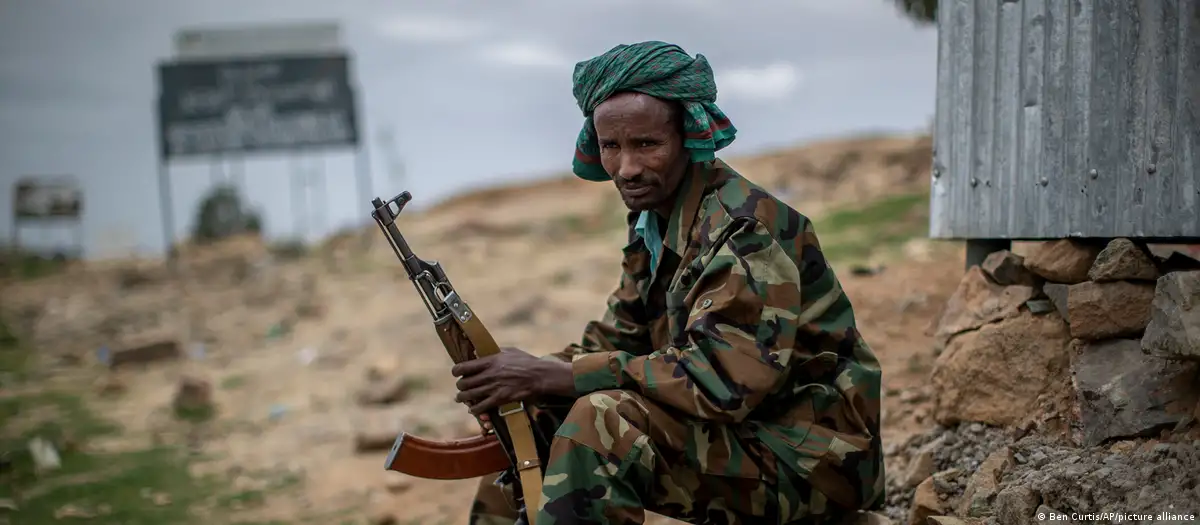
A sense of anxiety is hard to miss in Tigray. Though the 2022 Pretoria peace agreement brought an end to fighting between the Ethiopian National Defense Force (ENDF) and the Tigray People’s Liberation Front (TPLF), many in Tigray say life today is like walking on eggshells.
The TPLF, once the dominant party in Ethiopia’s ruling coalition (EPRDF) and the region’s political anchor, has split into rival factions competing for influence, leaving residents unsure who truly speaks for them.
The political division has created a vacuum. Meanwhile, Ethiopia’s federal government accuses Eritrea of supporting the TPLF, an accusation the TPLF and Asmara deny. But among Tigrayans, it feels like the ghosts of war have not gone away.
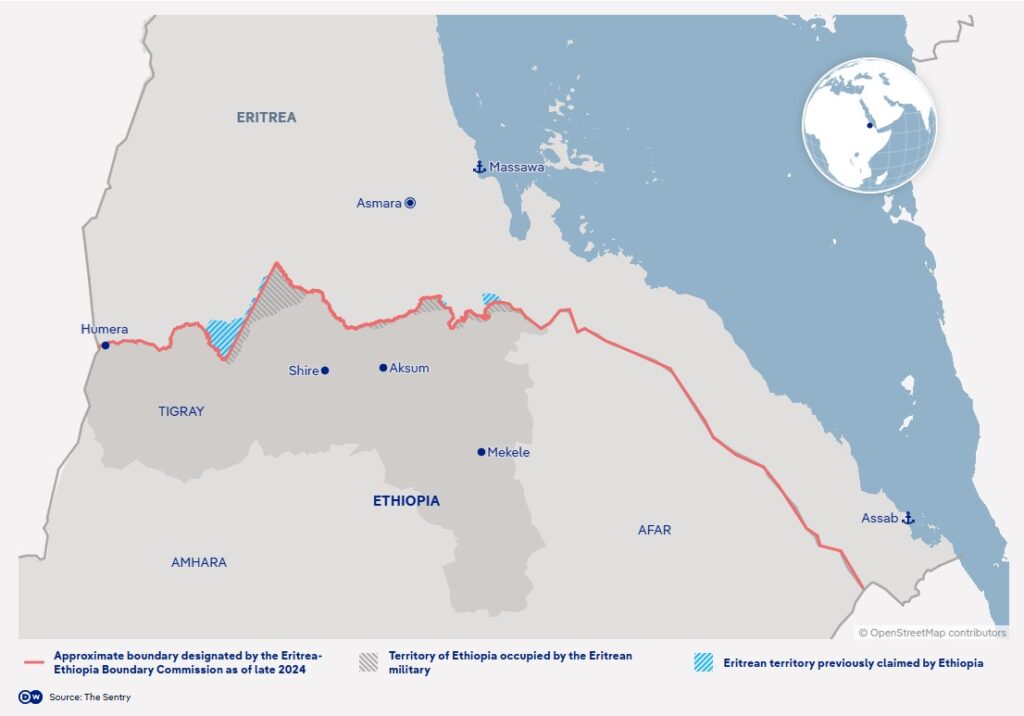
Multiple news outlets indicate that Ethiopian government soldiers and Tigrayan fighters have deployed along the Tigrayan region’s northern border.
“The situation is very frightening,” Mustafa Abdu, a legal expert and political analyst based in Tigray’s capital, Mekelle, said.
“The federal defense forces are stationed at all borders. Therefore, there are indications that this [war] is inevitable,” Abdu told DW, adding that according to the Pretoria agreement, the federal government is responsible for protecting the borders.
The looming threat of war has sent prices in Tigray skyrocketing.
“Just last week, a liter of petrol was 220 [Ethiopian] Birr ($1.42, €1.20). But as the tension of war increases, the price increases by 50, 60, 70 more birr every day since then,” Gebre Tsadiq Abraha, a taxi driver in Mekelle, told DW. The situation is forcing residents to take drastic measures.
“People are forced to hoard not only fuel but also food and other essential goods,” Nathaniel Tekleberhan, a resident of Mekelle said.
“Those who are suffering from chronic diseases, such as diabetes, are forced to buy and store them in large quantities. This is also because of the last experience, many people lost their lives during the last war due to lack of medicine,” he adds.
Real risk of war
Amdom Gebreselassie, chairperson of Arena Tigray for Democracy and Sovereignty, told DW: “The TPLF is also militarily active in the region.”
He warned that Shabia, another name for the Eritrean People’s Liberation Front (EPLF), was infiltrating several areas, particularly intelligence personnel. “Many are fully deployed. There is a risk of war, therefore, an outbreak of war is feared.”
“The people of Tigray are in dire straits,” Abdu said. “The war has hit them hard. They have not yet overcome their pain.”
He added that there is no market in Tigray, and the banks are empty.

Early this week, Volker Turk, the UN’s human rights chief, called on all parties to the conflict to urgently “de-escalate.”
“Political dialogue and confidence-building measures are urgently needed, not renewed resort to armed violence,” the UN rights envoy added.
Journalists denied access
On Thursday, an AFP journalist was denied boarding a flight destined for Tigray. Airport authorities said the accredited reporter did not have the Ministry of Foreign Affairs’ authorisation.
“This is a new rule that came into force today or yesterday,” said security staff at Addis Ababa airport, without providing proof.
In December 2025, the Ethiopian Media Authority permanently suspended two DW correspondents, accusing them of “continued non-compliance with Ethiopian laws and professional ethics.”
Despite repeated inquiries from DW, the Ethiopian media regulator did not identify any particular complaints about the journalists’ reporting.
Ethiopia also refused to renew the accreditation of three Reuters journalists following a recent report by the news agency that revealed an alleged training base in Ethiopia for Sudan’s Rapid Support Forces (RSF). BBC correspondents’ accreditation renewals were also turned down, according to AFP.
According to Reporters Without Borders, Ethiopia ranks 145th out of 180 countries in its 2025 Press Freedom Index, with five journalists currently behind bars.
During the war in Tigray, access to the frontline was heavily restricted for local and international reporters.
Ethiopia’s maritime ambitions
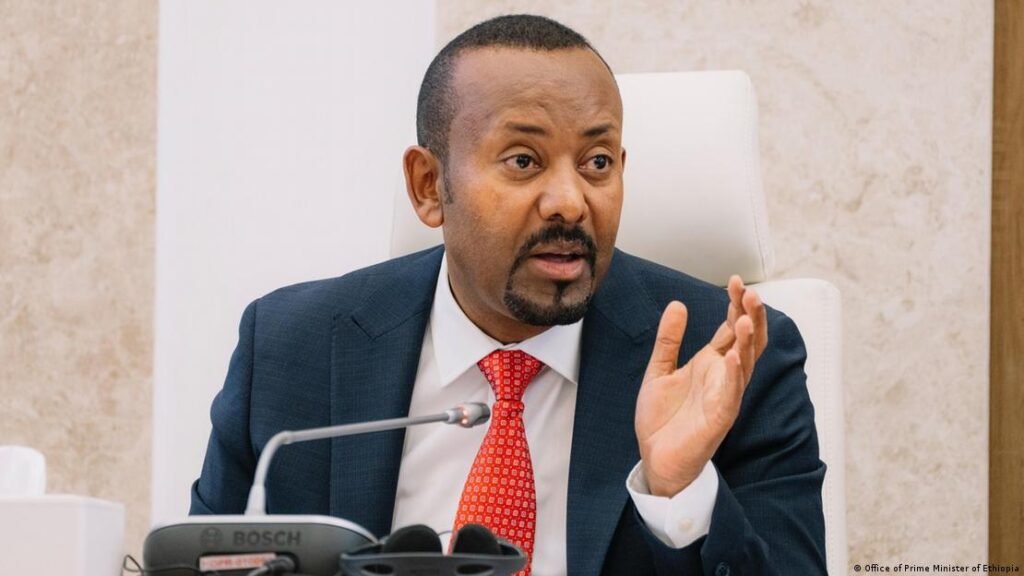
All this happens as tensions with neighboring Eritrea are rising. Abiy’s repeated demands for Ethiopia’s need for sea access have caused anxiety in Eritrea, with many fearing it could ignite new tensions.
“This year, we expect 10.2% growth,” Abiy told reporters this week alongside Turkish President Recep Tayyip Erdogan.
“But the continuity of this growth cannot be assured when a country of more than 130 million people is denied access to the sea. Regardless of experience and global trends, and due to the long-standing conspiracy of our enemies, Ethiopia has become a geographical prisoner, and this is not right,” Abiy stated.
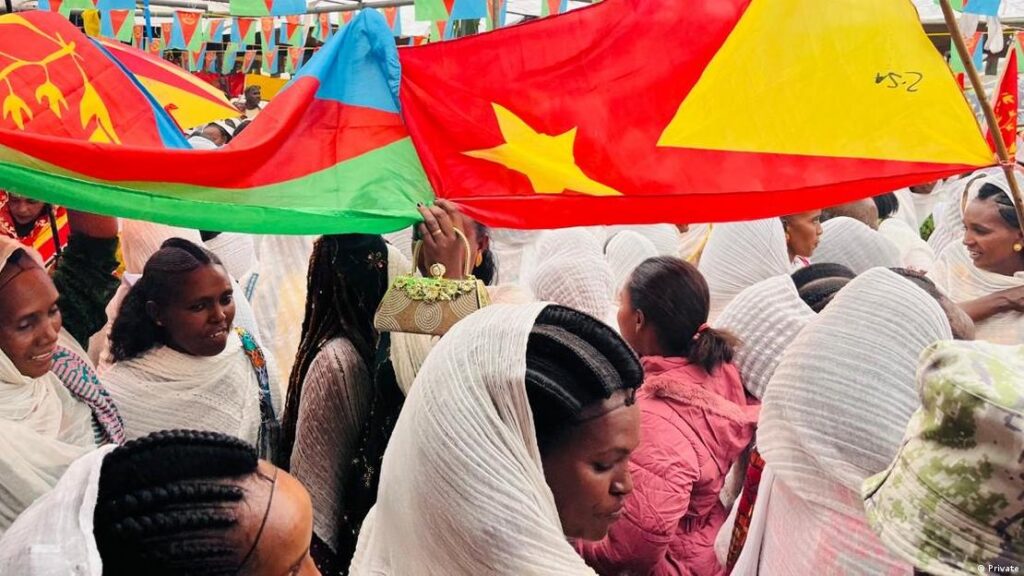
For a brief period after 2018, relations between Ethiopia and Eritrea thawed. But since 2023, that optimism is gone. Eritrea has carried out a nationwide military mobilization, while Ethiopia has moved troops toward the border. Civilians on both sides now live in fear that troop movements could develop into something way worse in the Horn of Africa.
Addis Ababa also accuses Asmara of supporting Fano insurgents in Ethiopia’s Amhara region. Eritrea, in turn, insists the accusations are baseless “false flags.” Eritreans remain deeply protective of Port Assab — just 75 kilometers (46 miles) from Ethiopia’s border — seeing any discussion of Ethiopian access as a threat to their hard‑won sovereignty.
Martin Plaut, a journalist and analyst specializing in the Horn of Africa, said Ethiopian leader Abiy Ahmed could be using the demand for sea access to distract from other pressing internal issues.
“He has conflict with the Oromo, he has conflict with the Amhara, he has conflict with the Tigrayans,” Plaut told DW, adding: “So it’s always useful to have a foreign issue to point to, just as President Trump did with Greenland. But it doesn’t mean that you have the right to go and take it.”
Eritrea fought Ethiopia in a 1961–1991 war for independence. Another war between the two took place between 1998 and 2000 over a border conflict.
In 2018, Ethiopian Prime Minister Abiy Ahmed and Eritrean President Isaias Afwerki signed a peace agreement, which led to the reopening of the border and earned Abiy the 2019 Nobel Peace Prize.
Prime Minister Abiy Ahmed maintains that Ethiopia will seek sea access peacefully. But Eritrea’s government remains skeptical of Addis Ababa’s true intentions.
Meanwhile, communities along the border wait and watch, hoping that diplomacy prevails this time — and that the fragile quiet around them does not break.