Source: linkedin
Mogadishu, Somalia — In the early days of March, Somalia’s capital moved quietly but decisively.
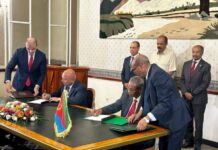
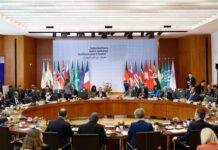
Behind the guarded walls of Mogadishu’s federal cabinet complex, ministers ratified a maritime cooperation agreement with Turkey, a document written in the careful language of port management, fisheries regulation and naval coordination.
Yet across diplomatic circles in the Horn of Africa, the implications were understood immediately.
The agreement signaled the formal arrival of Turkey as a resident maritime power along one of the most strategically sensitive coastlines in the world.
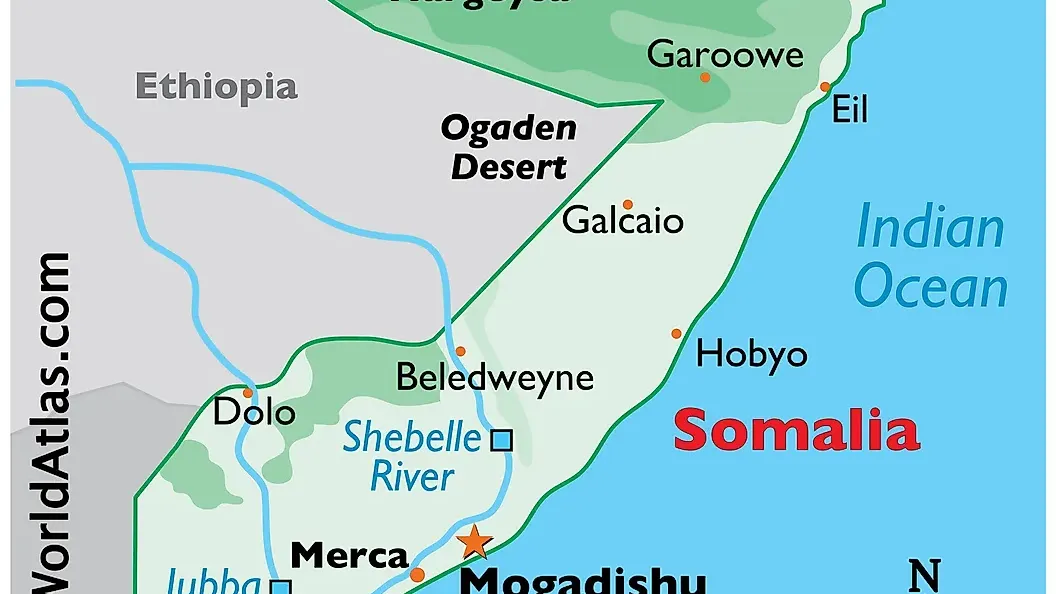
The pact grants Ankara an operational role in helping Somalia manage vessel traffic, secure its vast Exclusive Economic Zone and modernize maritime infrastructure along the country’s Indian Ocean coast.
For Somali officials, the agreement is framed as a long overdue attempt to reassert sovereignty over waters that for decades have been exploited by illegal fishing fleets, smuggling networks and, at times, pirate groups.
For Turkey, however, the agreement represents something broader: the geographic extension of its maritime doctrine known as “Blue Homeland.”
First articulated within the Turkish naval establishment and championed under the leadership of President Recep Tayyip Erdoğan, the concept envisions Turkey as a proactive maritime power capable of projecting influence across multiple seas – from the eastern Mediterranean to the Red Sea and now, increasingly, the western Indian Ocean.
What is beginning to emerge, regional analysts say, is the outline of a new maritime order in the Horn of Africa, one shaped less by Western naval patrols and more by the strategic ambitions of regional and middle powers.
A Crisis That Began on Land
The chain reaction that ultimately produced the maritime agreement began far from the sea.
In January 2024, Ethiopia signed a controversial memorandum of understanding with Somaliland, the breakaway region that declared independence from Somalia after the collapse of the Somali state in 1991.
The memorandum offered Ethiopia potential access to the port of Berbera and land for a naval installation, in exchange for the possibility of diplomatic recognition of Somaliland’s statehood.
For the central government in Mogadishu, the proposal was interpreted as a direct challenge to Somalia’s territorial integrity.
Within weeks, Somalia accelerated negotiations with Turkey, deepening a strategic partnership that had already expanded steadily over the previous decade through infrastructure projects, humanitarian assistance and military training.
By early 2026, that alignment had hardened.
Turkey extended its naval deployments in the Gulf of Aden through 2027, while Egypt, locked in its own geopolitical confrontation with Ethiopia over the construction of the Grand Ethiopian Renaissance Dam, began reinforcing its military presence in Somalia under the umbrella of African Union stabilization missions.
The maritime pact ratified this March therefore did not arrive suddenly.
It was the culmination of two years of steadily escalating geopolitical friction.
Two Axes, One Coastline
The Horn of Africa now appears increasingly divided between two overlapping strategic alignments.
On one side is what some regional analysts informally describe as the Mogadishu axis: Somalia, Turkey and Egypt, with quiet diplomatic support from Qatar.
Their objective is straightforward: preserve Somalia’s territorial sovereignty and perhaps prevent Ethiopia from establishing an independent naval foothold along the Somali coastline.
Opposing them is a looser constellation often referred to as the Berbera axis: Ethiopia and Somaliland, backed economically by the United Arab Emirates and watched with interest by Israel.
The underlying strategic logic is different.
Ethiopia, Africa’s most populous landlocked state, has long sought reliable maritime access. Somaliland, eager for international legitimacy and investment, views port development as its primary geopolitical asset.
The rivalry unfolding along Somalia’s coast therefore reflects competing visions of regional order.
The Mogadishu camp emphasizes centralized sovereignty and formal security alliances. The Berbera network prioritizes economic corridors, port logistics and flexible partnerships.
Between them lies one of the most critical maritime gateways on Earth: the shipping lanes connecting the Red Sea to the wider Indian Ocean.
Cairo’s Calculated Partnership
Perhaps the most intriguing participant in this emerging alignment is Egypt.
For Cairo, Somalia’s stability has become entangled with its own strategic rivalry with Ethiopia over the waters of the Nile River. Egyptian officials, experts suggest fear that if Ethiopia were to secure a permanent naval presence along the Somali coast, it could significantly expand its geopolitical leverage across the region.
Yet Egypt’s coordination with Turkey would have seemed improbable only a few years ago.
For much of the past decade, Ankara and Cairo stood on opposite sides of political conflicts across the Middle East and North Africa.
In the Horn of Africa, however, strategic necessity has produced a cautious convergence.
The reported quiet Egyptian military deployments to Somalia in early 2026 coincided with the arrival of Turkish naval assets in nearby waters, a rare moment of operational overlap between the two regional powers.
Still, diplomats privately acknowledge a delicate balancing act: while Egypt welcomes Turkey’s role in countering Ethiopian ambitions, it remains wary of Ankara emerging as the dominant naval actor in the southern Red Sea.
The Emerging Drone Frontier
Complicating the maritime picture is a quieter but potentially destabilizing technological shift.
Security analysts monitoring militant networks report growing indications of technical exchanges between Yemen’s Houthi movement and Somalia’s al-Qeada-linked extremist group, al‑Shabab.
The cooperation appears largely practical rather than ideological.
The Houthis have accumulated considerable experience in drone warfare and maritime targeting during confrontations with Western and Gulf naval forces in the Red Sea. Al-Shabab, meanwhile, maintains a presence along Somalia’s long and porous coastline.
Regional security assessments suggest that modified commercial drones and GPS-based tracking tools could enable militant groups to identify or harass vessels far beyond traditional coastal ranges.
If confirmed, such capabilities would represent a significant shift from the piracy-driven maritime insecurity that once defined Somali waters during the early 2010s.
For Turkey, the new maritime agreement provides both the legal framework and operational justification to deploy more advanced surveillance networks and counter-drone technologies in Somali waters.
A Divided Somali Conversation
Within Somalia, the agreement has triggered a debate that reflects the country’s broader struggle with sovereignty and external partnerships.
Supporters see the pact as a long overdue step toward asserting control over Somalia’s maritime domain. On the Somali-social media, the phrase “Badda Soomaaliya”, the Somali Sea, has circulated widely alongside praise for Turkey’s long-standing presence in the country.
But skepticism remains.
Critics worry that Turkish companies could gain disproportionate influence over fisheries and emerging blue-economy industries, a sensitive concern in a country where foreign fishing fleets have long been blamed for depleting coastal resources.
In Somaliland, where leaders reject Mogadishu’s authority entirely, the reaction has been sharper.
Political commentators in Hargeisa increasingly portray Turkey’s growing presence as outside interference and argue that Somaliland should deepen partnerships with alternative security partners to balance the Mogadishu-Ankara relationship.
The debate touches a question that has shadowed Somali politics for decades: whether external alliances strengthen sovereignty, or gradually redefine it.
From Development Partner to Security Guarantor
For much of the past decade, Turkey’s engagement in Somalia was associated primarily with development projects.
Turkish companies helped rehabilitate Aden Adde International Airport, managed the capital’s seaport and built hospitals, roads and schools across the country. Ankara also established the TURKSOM Military Training Center, the largest overseas military facility operated by Turkey.
The maritime agreement suggests that this relationship is entering a new strategic phase.
As Western naval forces concentrate increasingly on crises in the Red Sea and the Persian Gulf, the security vacuum along Somalia’s Indian Ocean coastline has widened.
Turkey appears determined to fill that gap not through temporary patrols but through permanent infrastructure, training programs and integrated maritime surveillance.
In practical terms, analysts say, this could mean that the next generation of Somali naval officers will be trained under Turkish naval doctrine and operate maritime systems manufactured in Turkey.
Whether that transformation ultimately stabilizes the Horn of Africa, or intensifies the geopolitical competition already unfolding along its fractured coastline, remains uncertain.
What is increasingly clear, however, is that the waters off Somalia, once associated primarily with piracy and neglect, are rapidly becoming one of the most contested strategic spaces in the Indian Ocean.
Abdi Guled is a Horn of Africa analyst and journalist focusing on political risk, armed groups and geostrategic competition in the region.