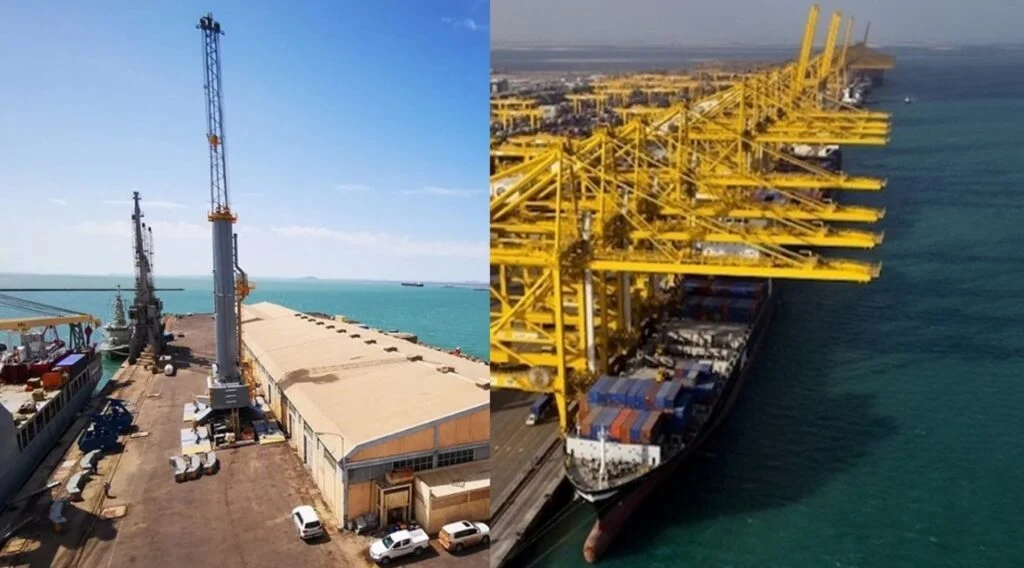
Addis Abeba – Ethiopia’s reassertion of its demand for sovereign access to the Red Sea has reopened historical wounds with Eritrea and reactivated long-dormant geopolitical tensions across the Horn of Africa. What was once a quiet strategic aspiration has now evolved into a central feature of Ethiopia’s national discourse, touching questions of state identity, economic survival, regional order, and the legitimacy of post-independence territorial arrangements. For a country of more than 120 million people, maritime access is not an optional pursuit or symbolic prestige project—it is a structural condition for national growth, economic competitiveness, strategic autonomy, and sovereign resilience.

Ethiopia’s renewed maritime push is not happening in a vacuum; it is unfolding in a region marked by layers of unresolved historical trauma, contested borders, fragile states, and competing external interests. The tension around Ethiopia’s Red Sea aspiration reveals something deeper than mere geopolitical maneuvering. It exposes fractures in the post-Cold War territorial settlement of the Horn, the weakness of institutions meant to govern secession and state continuity, and the inherently fragile nature of landlocked sovereignty in a region shaped by maritime trade. For Ethiopia, the pursuit of sea access has transitioned from a strategic desire into a national necessity—an existential requirement dictated by demographics, trade volumes, and the global economic system.
Since 1993, Ethiopia’s landlocked position has imposed structural costs on every sector of national development. The country’s dependence on Djibouti—a nation with less than 1/25th of Ethiopia’s population—creates a geopolitical asymmetry unprecedented in modern global politics. Ethiopia relies on Djibouti for over 90% of its imports and exports. This is not merely inconvenient; it is strategically paralyzing. Without sovereign maritime access, Ethiopia remains vulnerable to fluctuations in port fees, political shifts in Djibouti, competition from Gulf-backed port projects, and the strategic calculations of global powers heavily invested in the Red Sea corridor.
At the same time, Ethiopia’s aspiration triggers deep sensitivities for Eritrea, whose national narrative is rooted in a hard-won struggle for independence and territorial integrity. Any suggestion—explicit or implied—of revisiting border arrangements is read as a threat to Eritrean sovereignty. This dynamic is aggravated by mutual distrust, decades of war, and the absence of sustained diplomatic normalization. The issue is therefore not simply geography; it is psychological, historical, and political.
Against this backdrop, Ethiopia’s maritime reassertion is reshaping the diplomatic geometry of the Horn of Africa. Regional governments, global powers, and Gulf actors are recalibrating their policies in anticipation of how this question evolves. Whether Ethiopia pursues sea access through diplomacy, legal frameworks, or alternative corridors such as Somaliland, the implications will reverberate far beyond the immediate neighborhood.
Historical and Legal Ambiguity: Foundations of current tension
The roots of Ethiopia’s contemporary maritime dilemma run far deeper than the familiar narrative of Eritrea’s secession. They are embedded in a multilayered historical process marked by institutional opacity, wartime exhaustion, political bargaining, and the absence of formal documentation at critical moments. When Eritrea gained independence in 1993 through a UN-supervised referendum, the event was broadly celebrated as a democratic transition from war to peace. Yet beneath the optimism lay a profound administrative and legal vacuum: Ethiopia, a civilization with thousands of years of statehood and maritime tradition, became landlocked without any publicly accessible document outlining the legal mechanism of its loss of coastline.
This ambiguity resurfaced sharply on 28 October 2025, when Prime Minister Abiy Ahmed addressed parliament and issued a revelation that stunned the political establishment. He stated that “there is no official record or institutional decision” documenting how Ethiopia lost access to the Red Sea.” His remark triggered a nationwide question: If neither the public, the parliament, nor the cabinet formally approved the loss of maritime access, then through which legal or procedural mechanism was such a consequential decision enacted?
The implications of this silence are vast. International law is fundamentally textual—based on treaties, minutes, demarcation agreements, constitutional transitions, and internationally recognized procedures. When documentation is absent or incomplete, the historical narrative becomes vulnerable to reinterpretation, contestation, or exploitation. Ethiopia’s lack of archival clarity means that its present-day strategic claims must rely either on moral-historical arguments or on political negotiation—neither of which carries the legal weight of binding international agreements.
Eritrea, meanwhile, claims full sovereignty over the coastline based on the referendum’s outcome and its post-independence constitution. If Eritrea possesses relevant documentation—whether agreements, letters, or internal communications—Ethiopia stands at a disadvantage. The burden of proof in international disputes rests heavily on written records. Without them, Ethiopia’s historical claims become rhetorical rather than actionable.
The absence of documentation also constrains Ethiopia’s diplomatic flexibility. Addis Ababa cannot credibly petition international bodies, legal tribunals, or arbitration mechanisms to revisit historical maritime status if it cannot produce evidence. This structural gap effectively narrows Ethiopia’s strategic options, forcing it to operate within political—not legal—realms.
The theoretical appeal of reclaiming Assab—or any form of direct sovereign access to the Red Sea—is undeniable from Ethiopia’s standpoint.”
Thus, the challenge Ethiopia faces is not merely geopolitical; it is deeply epistemic. It must contend with the consequences of a historical silence that has shaped the present. The ambiguity surrounding its maritime loss has become a strategic liability, making diplomatic arrangements—not territorial revisionism—the only viable path forward.
Strategic Considerations: Between theoretical gains, operational realities
The theoretical appeal of reclaiming Assab—or any form of direct sovereign access to the Red Sea—is undeniable from Ethiopia’s standpoint. As a rapidly growing nation of more than 120 million people, Ethiopia’s economic trajectory is constrained by structural dependence on foreign ports. The idea of regaining its own coastline, or at least securing sovereign maritime access, resonates with national pride, strategic logic, and historical memory. For many Ethiopians, the sea is not just a commercial necessity but part of the country’s civilizational identity. Losing access in 1993 was experienced not merely as a geopolitical setback but as a symbolic rupture in Ethiopia’s territorial integrity and strategic continuity.
However, the strategic attractiveness of Assab collapses when operational realities are examined. Former Prime Minister Meles Zenawi’s candid assessment—relayed by former U.S. Assistant Secretary of State for Africa, Tibor Nagy—captures this contradiction powerfully. According to Nagy, Meles acknowledged that Ethiopia could theoretically seize Assab through military force, given Ethiopia’s demographic weight and military capacity. Yet he argued that such a move would be strategically foolish because Ethiopia could not guarantee the security conditions needed for international shipping to function. Eritrean rebels, or insurgent groups emboldened by a renewed conflict, could easily target vessels, forcing insurers to classify the port as a high-risk zone. If insurance companies refuse to cover ships entering Assab, no amount of military control could make the port operational.
This logic reveals the central paradox of Ethiopia’s maritime dream: gaining a port is easy; making it usable is the hard part. A port without secure waters is like a bank without a vault—symbolically significant but practically worthless. Ethiopia must consider not only how to access the sea but also how to ensure that the access is legally recognized, economically functional, diplomatically stable, and militarily secure.
The operational environment further undermines the feasibility of military options. Eritrea’s geography, fortified coastline, history of guerrilla resistance, and military doctrine are all shaped by defensive rigidity. A conflict would not yield quick victories; it would trigger asymmetric warfare with unpredictable outcomes. Ethiopia must also account for regional reactions. Djibouti, Sudan, Somalia, the African Union, and global powers with bases in the region—the U.S., China, France, and the UAE—would all view a unilateral attempt to seize Assab as destabilizing and unacceptable.
In essence, Ethiopia’s strategic necessity does not automatically translate into strategic feasibility. While the desire for Assab is grounded in logic, the path toward achieving it through force is blocked by operational, diplomatic, legal, and economic barriers that would impose greater costs than benefits.
Somaliland MoU: Strategically optimal yet undermined pathway
Against the backdrop of historical ambiguity, operational risk, and legal constraints, the Memorandum of Understanding (MoU) between Ethiopia and Somaliland emerges as the most realistic, peaceful, and sustainable route for Ethiopia to secure long-term maritime access. Unlike the highly volatile option of contesting Assab, the Somaliland MoU provides a structured diplomatic framework that allows Ethiopia to achieve its goals without triggering war, destabilizing the region, or violating international law. It is the only available pathway that satisfies Ethiopia’s strategic logic while maintaining the normative integrity of state borders across the Horn of Africa.
Yet despite its promise, the MoU has become entangled in a web of political hesitation, mixed messaging, and bureaucratic ambiguity—almost entirely on Ethiopia’s side. It is Ethiopia’s reluctance to take decisive steps—particularly those that might be interpreted as implicit recognition of Somaliland sovereignty—that has slowed the process and diluted its strategic value.
This hesitation has had cascading consequences. In the diplomatic realm, mixed signals from Addis Ababa created confusion among international observers, regional governments, and global partners. Some interpreted Ethiopia’s actions as a sign of weakness; others viewed them as indecision or lack of strategic commitment. Within Ethiopia, the lack of clear communication generated bureaucratic delays as agencies, ministries, and advisory bodies struggled to interpret the political message from the top. The result was a policy paralysis that undermined Ethiopia’s leverage precisely when it needed clarity and purpose.
Meanwhile, external actors—from the Gulf to the West and emerging Asian powers—began reassessing their positions on Somaliland. As one op-ed published by Addis Standard argued, anticipated recognition of Somaliland by countries such as Israel, the UAE, India, the United States, and the United Kingdom is no longer a speculative scenario but a developing geopolitical reality. If Ethiopia delays action until these recognitions take place, its bargaining position weakens significantly. Somaliland, newly empowered by international legitimacy, would demand higher concessions. Ethiopia would shift from being a policy setter to a policy taker—forced to negotiate from a weaker posture in a more crowded diplomatic field.
This is where anticipatory action becomes critical. Ethiopia must adopt a strategy of proactive engagement rather than reactive adjustment. Anticipatory over-compliance—demonstrating willingness to honor, deepen, and operationalize the MoU—would reassure Somaliland and earn Ethiopia credibility with global partners. Offering enhanced terms, such as increased equity in Berbera, reduced transit fees, and extended naval lease periods, would solidify Ethiopia’s position as a reliable and forward-looking partner.
Such steps would achieve several vital objectives simultaneously. First, they would reassure Somaliland of Ethiopia’s commitment to the agreement, thereby strengthening trust in a region where political promises frequently erode. They would also signal to regional and global stakeholders that Ethiopia is acting responsibly, eschewing territorial revisionism and upholding established norms. Finally, they would help mitigate the diplomatic repercussions of earlier hesitation, repositioning Ethiopia as a confident geopolitical player capable of strategic foresight.
In short, the Somaliland MoU is the only viable pathway that aligns with Ethiopia’s long-term maritime needs, regional stability, and international legal norms. But its success depends entirely on Ethiopia’s decisiveness. Delay is no longer strategic caution—it is strategic loss.
Regional Implications: Trade dynamics, security structures, and normative constraints
Ethiopia’s pursuit of sovereign maritime access—whether through the Somaliland MoU or alternative arrangements—cannot be understood in isolation. The Horn of Africa is an intricately interdependent region where trade routes, political alliances, security structures, and historical grievances overlap in ways that make every bilateral decision a regional issue by default. Ethiopia’s maritime ambition therefore carries implications that ripple across borders, influencing not only the country’s future but also the stability, economic architecture, and diplomatic norms of the entire region.
- Trade and Economic Interdependence
The Horn of Africa’s trade networks are tightly woven and highly sensitive to shifts in port usage, security conditions, and political agreements. Djibouti has built an entire national economic model on Ethiopia’s dependency, leveraging its geographical position into a regional logistics hub. A conflict over Assab or any abrupt shift in Ethiopia’s port usage could destabilize Djibouti’s economy—an outcome that regional and global powers stationed in Djibouti (the U.S., China, France, and Japan) would strongly oppose.
By contrast, the Somaliland corridor offers a complementary path that does not destabilize Djibouti. Expanding Ethiopian access to Berbera creates economic pluralism rather than zero-sum competition. It diversifies Ethiopia’s port options, lowers congestion, reduces transport risk, and encourages infrastructure integration, all while avoiding the collapse of existing trade dependencies. In a region where economic fragility is the norm, the MoU represents a rare case of positive-sum cooperation.
- Security Architecture
Security in the Horn is fragile and heavily influenced by historical wars, intra-state conflicts, insurgency movements, and external military interests. A military attempt by Ethiopia to seize Assab would instantly trigger regional insecurity. Eritrea’s defense posture is shaped by decades of asymmetric strategy; any confrontation would escalate unpredictably, potentially drawing in Sudan, Djibouti, or even Somalia. Moreover, the Red Sea is one of the world’s most militarized maritime corridors, hosting fleets from the U.S., China, Saudi Arabia, Egypt, Turkey, and the EU. Any destabilization would provoke international intervention.
The absence of official documentation surrounding the loss of Ethiopia’s coastline further weakens any historical or legal claim.”
The Somaliland MoU, however, encourages cooperative security rather than conflict. A structured naval lease and joint maritime operations could contribute to stabilizing a region plagued by piracy threats, informal trafficking networks, and geopolitical competition. Ethiopia’s naval development—long seen as a strategic necessity—could be anchored in a peaceful framework that strengthens rather than fractures the region’s security architecture.
- International Legal Dynamics
International law does not provide Ethiopia with a strong basis for reclaiming Assab, particularly given the absence of formal documentation regarding its loss. The principle of inviolable borders—enshrined in the African Union’s Charter—signals strong resistance to any territorial revisionism. Ethiopia would face isolation, sanctions, and legal opposition in global forums if it attempted unilateral changes.
The Somaliland MoU, however, is grounded in contractual legality. It does not violate sovereignty, alter borders, or contradict the AU’s principles. Instead, it creates a formal arrangement between two political entities without redrawing maps or triggering diplomatic crises.
- Normative and Diplomatic Constraints
The Horn of Africa operates under a delicate set of normative expectations regarding sovereignty, self-determination, and territorial integrity. Because of decades of conflict and secessionist pressures, governments in the region tend to interpret any border-related move as a precedent-setting threat. The Somaliland MoU is one of the few avenues that avoids triggering these sensitivities. Rather than reopening historical wounds, it constructs a practical corridor based on mutual benefit. It provides Ethiopia with the access it needs without threatening Eritrea, Djibouti, or Somalia.
In summary, Ethiopia’s decisions around maritime access have implications that transcend national borders. The path it chooses will shape the region’s trade networks, security environment, legal norms, and diplomatic relations for decades. The MoU with Somaliland uniquely aligns Ethiopia’s needs with regional stability—something force, revisionism, or unilateral moves cannot achieve.
Conclusion
Ethiopia’s maritime ambition is neither a newfound political posture nor a symbolic expression of national pride. It is a structural necessity embedded in the country’s demographic weight, economic trajectory, and geopolitical environment. For a nation of over 120 million people—one of Africa’s largest economies and fastest-growing populations—remaining permanently landlocked imposes constraints that no long-term development strategy can sustainably accommodate. The loss of coastal access in 1993 created a historical, economic, and psychological rupture that continues to shape Ethiopia’s strategic calculations today. The current resurgence of the maritime question is, therefore, not a momentary crisis but the inevitable resurfacing of unresolved historical and geopolitical tensions.
Yet the path to restoring maritime access is narrow and fraught with limitations. The military option—particularly any attempt to reclaim Assab—is strategically irrational, economically self-defeating, and diplomatically catastrophic. Ethiopia cannot afford a destabilizing conflict with Eritrea, nor could it operate a functional port in a conflict zone where insurers refuse to provide maritime coverage. The absence of official documentation surrounding the loss of Ethiopia’s coastline further weakens any historical or legal claim. In an international system governed by treaties and recorded agreements, silence is a strategic liability.
These realities narrow Ethiopia’s viable options to one pathway: structured diplomacy grounded in legality, partnership, and foresight. The Somaliland MoU is not perfect, but it is the only approach that aligns Ethiopia’s national imperatives with regional stability and international norms. It offers a peaceful, negotiated, and mutually beneficial solution that avoids reopening historical grievances or violating sovereignty principles central to the African Union and the UN. It creates a framework where Ethiopia can secure a military and commercial maritime presence while strengthening economic and security cooperation in a region that desperately needs stability.
However, Ethiopia’s hesitation has come at a cost. Mixed signals, delayed implementation, and bureaucratic ambiguity have undermined Addis Ababa’s credibility and weakened its negotiating leverage. As Somaliland edges closer to formal recognition by global and regional powers, Ethiopia risks being outpaced by external actors shaping the future of the Red Sea corridor. Proactive diplomacy—anchored in commitment, clarity, and anticipatory over-compliance—is now essential. Ethiopia must signal unmistakably that it is ready not only to honor the MoU but also to deepen it.
Ultimately, Ethiopia’s future as a regional power depends on its ability to navigate this moment with strategic maturity. The choice is not between ambition and restraint; it is between a realistic path that delivers long-term maritime security and a set of dangerous illusions that would bring catastrophic consequences. The Somaliland MoU stands alone as the option capable of transforming Ethiopia’s maritime aspiration into a durable reality. Through decisive action, Ethiopia can reposition itself as a responsible, forward-looking actor capable of shaping—not reacting to—the geopolitical architecture of the Horn of Africa. AS
Editor’s Note: Gulaid Yusuf Idaan is a senior lecturer and researcher specializing in diplomacy, politics, and international relations in the Horn of Africa. He can be reached at Idaan54@gmail.com
Disclaimer: The views and opinions expressed in this article are that of the writer’s and do not necessarily reflect the editorial of Addis Standard.